|Articles|March 2, 2011
Case 5
Advertisement
QUESTION 1
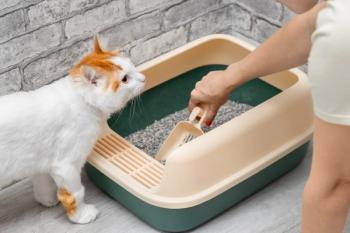
When presented with a case of inappropriate urination, be sure to ask the owners specific questions that will help guide your rule-out list and focus your diagnostic test selections. Define the clinical signs along with some possible differentials.
1. Stranguria
2. Pollakiuria
3. Hematuria
4. Polyuria
Advertisement
A. Frequent, large-volume urination-pyelonephritis; drug effect; metabolic or endocrine disease
B. Frequent, small-volume urination-lower urinary tract infection/inflammation
C. Straining to urinate-obstruction in the bladder (trigone) or urethra
D. Blood in the urine-bladder calculi or crystalluria; thrombocytopenia; upper or lower urinary tract inflammation
<<

Advertisement
Related to this article

Veterinary and engineering students at Auburn University worked through several prototypes and campus visits to build a 3D-printed laryngoscope for teaching intubation in goats and pigs.

Brandon Stapleton, DVM, explains how fresh food differs from raw diets and how digestibility, hydration, and portioned meals can support weight management and hard-to-feed patients in this episode of The Vet Blast Podcast

The World Health Organization recognized the country's more than 50 years without a human case of dog-mediated rabies, crediting sustained vaccination, surveillance, and cross-sector collaboration.

Christopher Lee, DVM, MPH, DACVPM, DACVM (Parasitology), discusses the clinical significance of Toxoplasma gondii, when veterinary professionals should consider testing, and how to communicate the risks of exposure to clients.

A candid conversation on why difficult client interactions can linger, how repeatedly pushing aside the emotional impact can affect future interactions, and how intentional debriefing can help veterinary professionals process those experiences in a healthier way.

New CDC and climate data show tick exposure and pollen seasons are both stretching well beyond their traditional windows, a trend animal health company Elanco says is also increasing demand for veterinary care.

Valli Parthasarathy, DVM, PhD, DACVB, breaks down the "3 M's"—management, modification, and medication—for treating behavior problems in parrots, and explains why sparse species-level drug research makes the first 2 her starting point for these birds.
Advertisement
Advertisement
Trending on dvm360
1
Q&A: The truth about Toxoplasma gondii risk from household cats
2
Why a synergistic fiber blend can outperform single supplements in pets’ gut health
3
When difficult client interactions stick: Processing their emotional impact
4
First US horse case of New World screwworm in 60 years confirmed; fourth dog case also reported
5