Sponsored by Zoetis
Managing chemotherapy and neutropenia
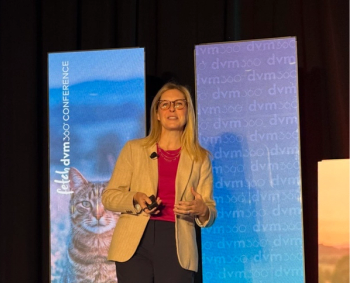
“What we’re talking about for most cases is maximum tolerated dose (MTD) chemotherapy,” said Sue Ettinger, DVM, DACVIM (oncology), at a recent VMX veterinary conference. One of the primary challenges in chemotherapy is administering the MTD while ensuring the patient does not experience severe adverse effects. Neutropenia, a condition characterized by low neutrophil levels, is a major concern in veterinary oncology.
Chemotherapy targets rapidly dividing cells, which is why common adverse effects include gastrointestinal (GI) distress, hair loss, and, notably, neutropenia. “We think about [effects on] hair follicles, GI cells, and neutrophils,” said Ettinger. “Those are the ones that have the highest turnover and are most likely to be affected by chemotherapy.”
To manage neutropenia, chemotherapy protocols are spaced out to ensure that healthy cells have time to recover. "This is different than metronomic chemotherapy, which is low-dose pulse chemotherapy," said Ettinger. MTD chemotherapy requires specific intervals to allow for cell recovery. Severe cases of neutropenia can lead to hospitalization, but this is relatively rare. "About 5 to 7 percent of dogs experience severe toxicity from chemotherapy side effects, meaning they would end up in the hospital," said Ettinger. This differs from the much higher toxicity rates seen in humans undergoing chemotherapy.
Complete blood count (CBC) monitoring in treatment decisions
Accurate CBC monitoring is crucial in determining whether a patient can proceed with chemotherapy. Focusing on neutrophil counts rather than total white blood cell counts when making treatment decisions would be Ettinger’s suggestion. She noted that vets often asked whether, if the white blood cell count is low, they could treat the patient with chemotherapy. However, white blood cell count is not the most important factor. “I ask, ‘What’s the neutrophil count?’ I’m looking at neutrophil to determine if [the patient] can get chemotherapy," said Ettinger.
Ettinger also mentioned new advancements in CBC technology worth noting, in particular the Vetscan OptiCell (Zoetis), which provides AI-powered CBC analysis. This technology offers more accurate platelet and neutrophil counts, reducing unnecessary delays in treatment. Ettinger shared an example where an older CBC machine read a platelet count as 73,000, while the Vetscan OptiCell corrected it to 154,000, allowing chemotherapy to proceed safely. "It’s more accurate," said Ettinger.
Additionally, the timing of CBC tests is critical. Neutrophil counts fluctuate, with the lowest point (the nadir) occurring 5 to 7 days after chemotherapy for most drugs. Checking too early can make it easy to miss the nadir, and checking too late may delay intervention. Ultimately, knowing the timing for each drug is essential.