A leading veterinary parasitologist warned that the first New World Screwworm detection in Texas likely marks the beginning of the parasite's reestablishment in the United States—not an isolated case.
In an interview with dvm360, Christopher Lee, DVM, MPH, DACVPM, DACVM (Parasitology) said the single confirmed case—roughly 50 miles inside the border—almost certainly understates the threat.
"This is the first time that we've documented it, but the likelihood is that we have potentially hundreds to thousands of these flies now here," Lee said, pointing to the wave of infestations that has already swept through Panama, Central America, and Mexico.
He cautioned that ramping sterile-fly production facilites to full production could take up to 18 months to two years, adding that Americans accustomed to quick fixes should expect this fight to stretch across "a couple or more years."
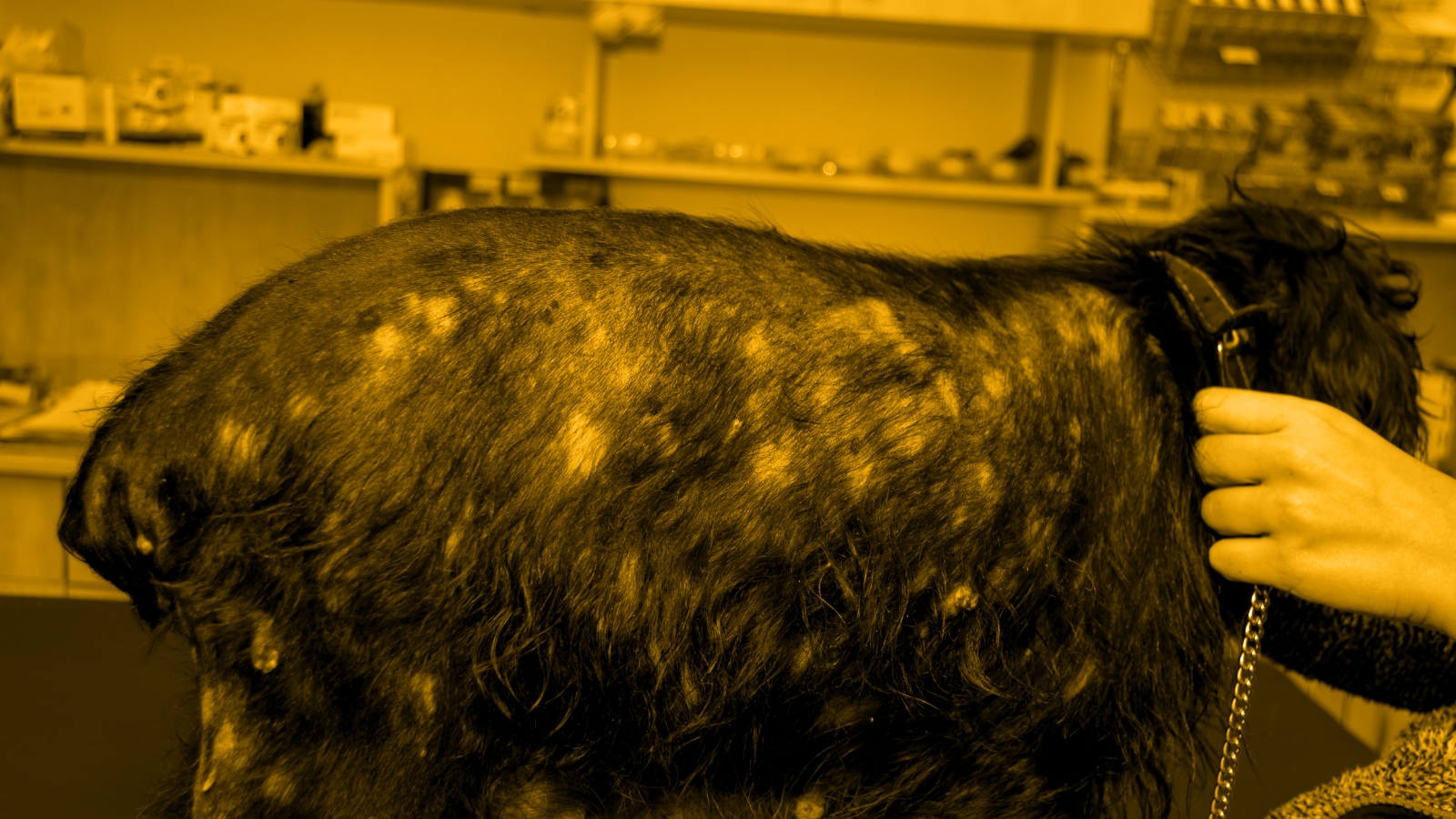
Lee urged pet owners not to panic, but to keep dogs and cats on year-round combination prevention. The isoxazoline products many pets already take for heartworm and fleas also guard against screwworm.
dvm360 will have more from the interview with Lee soon.
June 4, 2026—NWS is addressed in congressional testimony
Companion Animal Parasite Council: 4 core NWS recommendations
1. Keep companion animals on year-round ectoparasite control. This is the baseline preventive measure across the board.
2. Monitor wounds closely. Any suspect fly larvae found on a wound should be identified to rule out NWS, as early-stage infestations can resemble ordinary myiasis.
3. Watch animals that travel. Pets visiting endemic areas or regions with reported outbreaks warrant extra attention.
4. Report immediately. NWS is a reportable condition. Suspected or confirmed cases must be reported to the Animal and Plant Health Inspection Service (APHIS) Area Veterinarian in Charge for the state and to state animal health officials. For imported animals, the APHIS Veterinary Services live animal import unit should also be contacted.
US Secretary of Agriculture Brooke Rollins addressed the Texas detection during testimony before the House Committee on Agriculture, saying the US Department of Agriculture (USDA) is treating the confirmed case "with the utmost seriousness" and responding aggressively alongside the Texas Animal Health Commission. Rollins said the USDA's proactive actions provided nearly a year of preparation (models had projected that the NWS would reach the US by summer 2025), allowing the agency to move immediately when the case was detected.
"We are using every tool available, in partnership with states, ranchers, and wildlife officials, to eradicate this pest before it can spread and threaten American cattle producers," she said.
Rollins said the department activated its NWS Response Playbook, establishing quarantines and movement controls, accelerating sterile-fly releases, expanding border trapping, and intensifying livestock and wildlife surveillance.
June 4, 2026—Merck Animal Health highlights Exzolt Cattle-CA1 availability ahead of NWS response
Merck Animal Health said Exzolt Cattle-CA1 (fluralaner topical solution), which received FDA conditional approval in December 2025, is available by prescription ahead of the NWS response. The company said supply has been prioritized along the southern border to ensure veterinarians and producers in the highest-risk areas have ample access.
- For cattle: Exzolt Cattle-CA1 is a pour-on solution conditionally approved for the prevention and treatment of NWS larvae infestations. It is the only product conditionally approved for both NWS and cattle fever tick. Fluralaner is the first isoxazoline ectoparasiticide conditionally approved for use in US cattle. It is approved for beef cattle 2 months of age and older and replacement dairy heifers younger than 20 months, and carries a 98-day meat withdrawal period. It is available by prescription only.
"We continue to work closely with the FDA and state and local cattle organizations to ensure our customers are prepared and have the tools and resources they need," a Merck Animal Health spokesperson told dvm360.
June 4, 2026—Elanco outlines treatment options available for NWS
Elanco announced a portfolio of treatment and prevention options for NWS across livestock and companion animals, several of which received emergency regulatory authorizations ahead of the confirmed US detection.
- For dogs: Credelio Quattro-CA1 (lotilaner, moxidectin, praziquantel, and pyrantel) holds FDA conditional approval for treatment of NWS larvae infestations. Credelio (lotilaner) carries an FDA EUA for the same indication.
- For cats: Credelio Cat (lotilaner) holds a comparable EUA.
- For livestock: Negasunt Powder (coumaphos, propoxur, and sulfanilamide) and Tanidil (coumaphos, propoxur) have received EUAs but will be available exclusively through the USDA Animal and Plant Health Inspection Service (APHIS) and its National Veterinary Stockpile, distributed in coordination with state animal health officials. Catron IV (permethrin), which kills and controls screwworm flies and maggots in livestock, remains available through standard channels under existing Environmental Protection Agency (EPA) approval.
Veterinarians should note that Negasunt Powder carries a neurotoxicity warning requiring full personal protective equipment, including chemical-resistant gloves and a National Institute for Occupational Safety and Health–approved respirator, and treated animals cannot be slaughtered for human consumption within 28 days of the last treatment. It is not authorized for use in dogs, cats, birds, or free-ranging wildlife.
"New World screwworm could have a devastating impact on animal health, welfare, and producer livelihoods," Jeff Simmons, president and CEO of Elanco, said in a company news release, adding that they are working alongside the broader US animal health industry to help fight the parasite.
June 3—Texas agriculture commissioner urges President Trump to deploy SWASS
Texas Agriculture Commissioner Sidney Miller urged President Donald J. Trump to direct the USDA to immediately deploy the Screwworm Adult Suppression System (SWASS), a USDA-developed technology used in previous eradication campaigns that combines attractants, bait, and targeted EPA-approved insecticides to reduce adult screwworm populations and complement sterile fly releases.
"USDA already owns the playbook; the only question is whether USDA will use it before this situation gets worse," Miller said.
He added that the Texas Department of Agriculture stands ready to fast-track SWASS approval in the state and that he had personally provided the SWASS bait formula and supporting research to Rollins and her team on 3 occasions during the pest's northward advance.
June 3—Agriculture groups respond to NWS detection
National farm and livestock organizations responded to the Zavala County detection with a common set of themes: support for the USDA's preparation, reassurance on food safety, and calls for a science-based, adequately resourced response.
Russell Boening, president of the Texas Farm Bureau, said the detection "marks a new chapter for our state" and called on livestock producers and all Texans to be vigilant in managing and combating the pest. Boening expressed confidence in the federal and state protocols established to eradicate NWS from Texas, as was accomplished decades ago, and reiterated that the pest poses no impact to food safety.
The National Milk Producers Federation (NMPF) framed the return as an anticipated setback.
"The return of New World screwworm to the United States decades after its initial eradication is a disappointing milestone, but it's also one for which dairy producers have been preparing for more than a year," said Gregg Doud, president and CEO of NMPF.
NWS resources for veterinarians
A list of resources for veterinarians looking to learn more about NWS.
He stressed that the detection has no effect on food safety, noted that dairy and other livestock producers have pledged close collaboration with the USDA and state and local officials, and urged that any decisions affecting animal movements follow scientific guidance to avoid economic harm greater than that caused by the pest itself. NMPF also asked that adequate resources be devoted to the response.
Stacy Simunek, president of the Oklahoma Farm Bureau, called the detection a moment for the agriculture community to come together.
"With today's news of the first case of New World screwworm in the United States in decades, this is a time for farmers, ranchers, and our entire agriculture community to work together to ensure this pest is contained and eliminated as quickly as possible," Simunek said.
Simunek urged producers across the state to learn what an infestation would look like on their operation and to step up vigilance, anticipating market volatility from the discovery, and thanked Rollins for the past year's preparatory work while asking the administration to keep prioritizing NWS monitoring and response.
June 3, 2026—USDA confirms NWS detection in South Texas calf
The USDA APHIS confirmed the detection of NWS in a bovine in Zavala County, Texas. The affected animal is a 3-week-old calf, with larvae identified in its umbilical area; APHIS reported no further detections at the time of the announcement. The specimen was sent to the USDA's National Veterinary Services Laboratories in Ames, Iowa, for confirmatory testing.
USDA and Texas officials activated a unified Incident Command Team with the Texas Animal Health Commission, establishing a 20-km infested zone around the detection with quarantines, movement controls, and surveillance, and expediting the release of sterile NWS flies in the area. The agency emphasized that the US food supply is not at risk, as screwworms do not infest meat or other food sources. Veterinarians who suspect infestation should contact their state animal health official or the USDA area veterinarian in charge immediately.
Full coverage here.