






Internet rumors are probably the most modern form of folklore (handed-down beliefs, stories, and customs), following on the heels of faxlore, xeroxlore, chain letters, and campfire stories.
Internet rumors are probably the most modern form of folklore (handed-down beliefs, stories, and customs), following on the heels of faxlore, xeroxlore, chain letters, and campfire stories.
Diagnosing and treating forelimb conditions in dogs can be very challenging. Many dogs present with a similar history including minimal responsive to rest and non-steroidal anti-inflammatory drugs and increased lameness following exercise and heavy activity.
Dogs that present with the vague client complaint of "ain't doin' right" can be a particularly difficult diagnostic challenge when the only significant finding on a routine physical examination is fever. The cryptic fever becomes even more challenging when the results of routine diagnostic laboratory work fail to localize the disease process.
The most common hind limb orthopedic/sports medicine conditions afflicting active dogs are iliopsoas strains, cranial cruciate ligament (CCL) insuffiency and gracilis and semitendinosus contracture.
There is a homeless pet crisis in the United State that is a direct result of animals left unaltered in our communities. ASPCA and HSUS estimates are that 6-8 million animals are placed in shelters each year and of these 3 – 4 are euthanized. That equates to one animal euthanized every 2 seconds every working day each year.
Veterinarians that care for service dogs such as police, military, and search and rescue dogs are entrusted in maintaining the health of animals that provide a vital service to man, especially during times of crisis such as the terrorist events of 2001, when the searching abilities of the these dogs were of paramount importance.
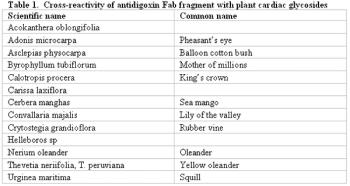
Antidotes can be divided into three broad catagories: chemical antidotes, pharmacologic antidotes, and functional antidotes. Chemical antidotes act directly on the toxicant to make it less toxic and/or more readily excreted. Pharmacologic antidotes antagonize toxic agents at their receptor sites or through other macromolecules.
The objective of this session is to provide the practitioner with the knowledge required to effectively manage a canine breeding.
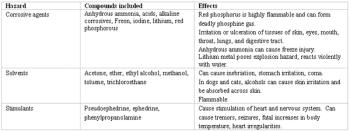
Methamphetamine, also known as Meth, Speed, Ice, Crystal, Chalk, Crank, Tweak, Uppers, Black Beauties, Glass, Bikers Coffee, Methlies Quick, Poor Man"s Cocaine, Chicken Feed, Shabu, Crystal Meth, Stove Top, Trash, Go-Fast, Yaba and Yellow Bam, is a highly addictive and powerful stimulant drug.
Think back to when you first learned to perform ovariohysterectomies and neuters. It is probable that you were taught these procedures early in your surgical education at a time when you had limited surgical skills.
In the field of small animal orthopedics, orthoses, prostheses and other assistive devices are an emerging technology that can aid in the well-being of our canine patients. These devices are used to either correct or accommodate the affected limb(s) following trauma or surgical intervention, and may be utilized as temporary or permanent modalities.
The normal male dog attains puberty at approximately 6 – 8 months of age. Sexual maturity is generally attained at 18 – 30 months. Males may successfully breed bitches prior to sexual maturity but they will not achieve maximal fertility or daily sperm output until mature.
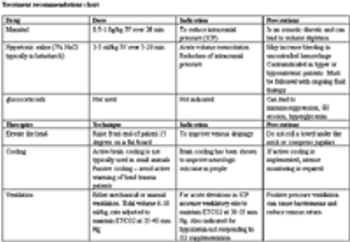
Head trauma can result from a variety of different types of injury in dogs and cats. The aim of treatment for head trauma is the prevention of secondary brain injury.
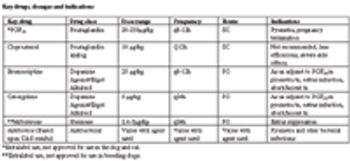
When pyometra occurs in a pet animal, the decision for surgical intervention is uncomplicated. When pyometra occurs in a valuable animal intended for breeding, the breeder client often opts for medical treatment.
Canine breeding management centers hinges on ovulation timing. Ovulation timing is important because it is critical to have viable spermatozoa in the bitch's oviducts at the time the eggs are mature and ready to be fertilized.
Manly men were laid low watching a routine medical procedure.
In the article "My approach to canine dystocia" in the December issue, Dr. Scott Shaw provided an experienced approach to dystocia management, but several points need clarification.
In 1958, after working for other veterinarians, I established my own practice in Ventura County, Calif. Ventura County is the size of some Eastern states.
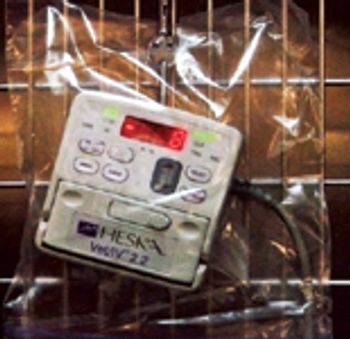
We place gallon-size zippered plastic bags over our intravenous pumps, so they don't get diarrhea from patients with parvovirus infection or other contaminants on them.
Apparently, black is black and white is white only if your brain agrees.
New York - dvm360.com and DVM Newsmagazine netted two national Jesse H. Neal National Business Journalism Awards in early March.
A 3-year-old intact female Shetland sheepdog was observed chewing pellets of mole and gopher poison (zinc phosphide 2%).
To extend the life of timers used around the lab-where wet hands frequently touch them and they are sometimes accidently dropped into the sink-we place our timers in zippered plastic bags.
We use a fair amount of maropitant (Cerenia-Pfizer Animal Health) in our practice.
A proper understanding of the terms acidosis, alkalosis, acidemia, and alkalemia is necessary to differentiate simple from mixed acid base disorders. Acidosis and alkalosis refer to the pathophysiologic processes that cause net accumulation of acid or alkali in the body, whereas acidemia and alkalemia refer specifically to the pH of extracellular fluid.
Non-core vaccines are those which we as a profession have determined are not recommended for all dogs or cats. Vaccination, in general, has the benefit of potentially lessening the prevalence or severity of disease, ensuring that patients are examined on a regular basis, increasing practice revenue, and potentially saving clients money in the long-run.
Simplistically speaking, antibiotic-responsive diarrhea is a case of diarrhea that responds to antibiotic therapy.
The initiating event of acute pancreatitis is the premature activation of digestive zymogens within the acinar cell. Premature activation of digestive zymogen results in acinar cell necrosis and pancreatic autodigestion.
The typical clinical signs of anemia are weakness, exercise intolerance, inappetance or anorexia, pale mucous membranes, tachypnea, and icterus. The degree to which these clinical signs are manifested are dependent on the speed at which the anemia develops and the severity of the anemia.
Whenever possible the inciting cause should be removed. However, as indicated above this may be difficult to accomplish as most cases of canine and feline pancreatitis are idiopathic.