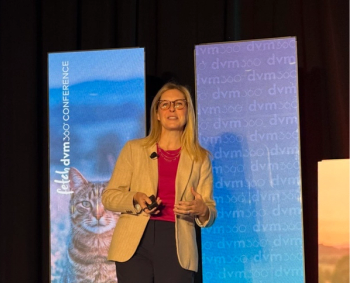
In an interview with Lacey Rosenberg, DVM, DACT, an associate veterinarian for Veterinary Specialties at the Lake in Sherrills Ford, North Carolina, she explained her start in veterinary theriogenology and interest in animal reproduction. She also described the technique for a neonatal resuscitation and some of the tools she uses during the Fetch dvm360 conference in Charlotte, North Carolina.
Below is a partial transcript.
Lacey Rosenberg, DVM, DACT: So growing up, I had like pretty much every pet and my mom had this hyper fixation on breeding animals. So, we had purebred collies and we had a litter of collies. And then we like had a cat that got out and got pregnant, we have a litter of kittens...So kind of just growing up, [I was] always exposed to animals, always exposed to breeding, and really just found the science of reproduction fascinating.
Neonatal resuscitation, when we kind of think about it, from our perspective, it's after a C-section. So usually you've got a whole litter of puppies or kittens that were trying to wake up from some level of anesthesia at once. So the most important thing is really having your resuscitation area ready and having all of your tools.