
















Behavioral practice requires many components.
Behavioral practice requires many components.
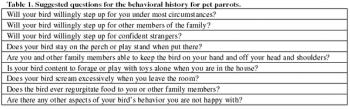
Most avian practitioners and many owners understand the importance of yearly physical examination for disease prevention and care of the physical health of the bird.
How SRIs, SSRIs, SNRIs, and TCAs can help treat behavior problems in animals.
Benzodiazepines facilitate GABA in the CNS by binding to GABA-A receptors.
Feline behavior problems can be a real challenge to correct, but with a little forethought and the right information, owners can easily prevent most common problems.
Fears and phobias may be due to a pet's genetics, learned from an unpleasant experience or result from inadequate socialization.
One of the most crucial steps in working up a dog aggression case is assessing the danger inherent in the situation.
Housesoiling is the most common behavior problem for which cat owners seek help.
Obsession: "...persistent idea, thoughts, impulses, or images that are experienced as intrusive and inappropriate and that cause marked anxiety or distress".
Solitary: A species in which individuals form no enduring social relationships, living most of their lives in a solitary condition, and forming no enduring pair bonds.
Human-directed aggression in cats can include the following: play, fear, petting Intolerance, status related, redirected, and sexual.
Veterinary behavior: The branch of veterinary medicine which deals with the prevention, diagnosis and treatment of behavior problems in non-human animals.
Roughly 10 million dogs and cats are euthanized (killed) in shelters every year, and most of these animals are relinquished because they have behavioral problems that the owners can't (or don't want to) deal with.
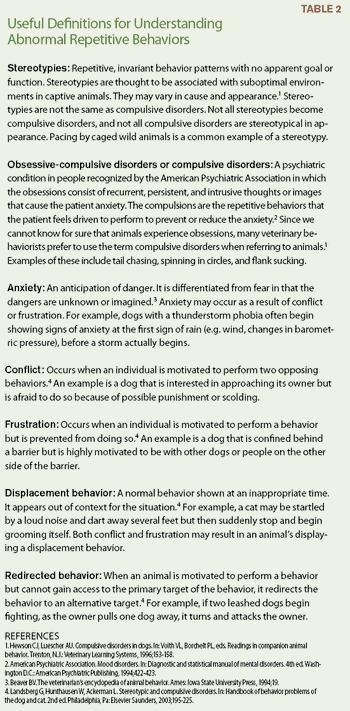
A dog's constant, repetitive licking of objects or surfaces is a problem whose frequency is difficult to determine. This licking may occur often, but because it seems harmless and may only be somewhat annoying, many owners accept this unusual behavior or simply ignore it. However, some owners will inquire about it during a routine checkup and ask for advice.
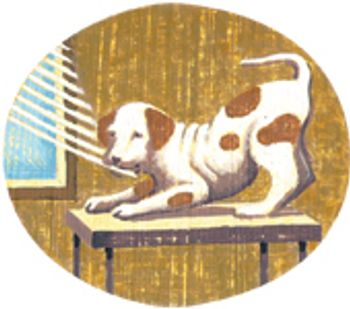
Talking to pet owners about separation anxiety.
San Francisco - The American Veterinary Society of Animal Behavior (AVSAB) urges specialists and general practitioners to drop punishment as a first-line treatment to modify a pet's behavior.
Puppies can play rough. So to ensure a lifetime of safe and happy interactions, learn how to play appropriately with your new puppy from the start.
San Francisco - 12/12/07 - The American Veterinary Society of Animal Behavior (AVSAB) released a position statement and guidelines last month titled "Use of punishment for dealing with behavior problems in animals."

Many owners begin their relationship with new puppies armed with misinformation and an idealistic view of the pet-owner relationship. Owners often don't know how to properly shape behaviors or handle problems, and one area that needs special attention is play aggression.
Behavioral assessments and medical records of dogs evaluated at the University of Pennsylvania School of Veterinary Medicine for human-directed aggression provide much-needed data regarding the circumstances surrounding dog bites in children.
Have your clients fill out this behavior assessment form at every visit to identify any possible behavior problems.
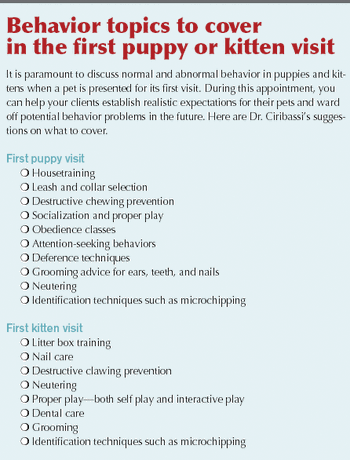
Misbehaving is the most dangerous thing a companion animal can do.
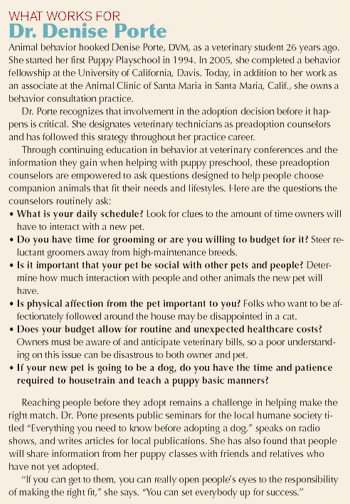
Although it is obvious to veterinarians that a Border collie and a 96-year-old woman likely make a poor pet-owner match, it may not be obvious to a potential owner who has never been around Border collies. Indeed, one reason healthy animals wind up in shelters, says Gail Golab, PhD, DVM, American Veterinary Medical Association (AVMA) interim director for animal welfare, is because people "acquire a pet with an expectation the pet doesn't fulfill."
Have your clients fill out this form if they indicate that they think their pet has a behavior problem.

Medicating a headstrong cat can be a challenge. However, compounding pharmacies have made the task easier by preparing many medications as flavored liquids, chewable treats, or transdermal gels.