











There are some qualities an associate must have to be a successful practice owner. Then there are other qualities that aren't absolutely necessary but can be taught.
There are some qualities an associate must have to be a successful practice owner. Then there are other qualities that aren't absolutely necessary but can be taught.
Animals serve many roles when it comes to energy and the planet. Their energy fields are far more expansive than ours – a dog's energy field is approximately ten times that of a human's. A horse's field will encompass a large arena, and a cat's will fill an entire property. The energy of wildlife is especially important to the survival of the planet. They create a frequency that maintains the vibrational health of the planet, and all creatures on it.
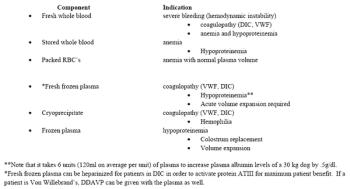
Transfusion of blood products is an important lifesaving measure performed frequently in veterinary medicine. The decision to transfuse should not be taken lightly: it is costly and can frequently be clouded by complications. Blood transfusion therapy should be limited to the treatment of anemia, hypoproteinemia, coagulation disorders, or hemodynamic instability.
The role of the veterinary technician in traumatic emergencies is pivotal to the survival of the incoming patient. The physical exam must be quick, thorough, and concise. Utilization of all technical skills from careful visualization, palpation, and auscultation is of the utmost importance.
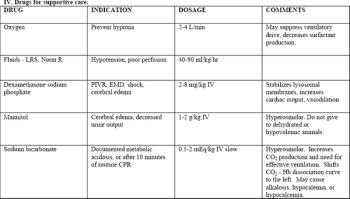
Anesthetic arrests and patients with reversible conditions should be resuscitated aggressively. Reasons for such a poor success rate include severity of underlying disease, delay in the recognition of CPA, and delay in delivery of appropriate therapy.
Energy to most of us is something that turns lights on and off and runs our cars. We don't realize we are made of energy, and that we interact with other humans and animals on an instinctive, energetic basis. Having an awareness of how we affect others allows us to be better colleagues, practitioners and care givers.
As veterinary professionals, we have been trained to create a practice environment that focuses on maintaining cleanliness and reducing disease transmission. While these are vital to the health of our staff and patients, we must also consider other aspects of healing. The emotional and energetic atmosphere our clients, staff and patients are exposed to does influence their physical, mental and behavioral well being. It is our obligation to provide a setting conducive to improving staff work life and patient health.
Capnographs are used to measure ETCO2. Most capnographs use infrared light absorption to measure CO2 levels. Capnographs allow for continuous monitoring of the patients CO2 levels. ETCO2 is reflective of the patients PaCO2 usually within a 5mmHg gradient, this gradient can be affected by pulmonary perfusion.

The old gray Mac, she ain't what she used to be.

How can we convert price shoppers into clients?
Idiopathic inflammatory bowel disease (IBD) is defined as gastrointestinal signs (vomiting, anorexia, diarrhea) greater than 3 weeks duration, with incomplete response to dietary trials and anthelmintics, biopsy findings of mucosal inflammation, and clinical response to immunomodulatory therapies.
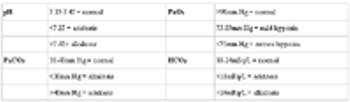
Blood gas analysis provides information about respiratory function and acid/base status. This information is vital in determining and monitoring treatment of patients with primary or secondary respiratory disease and/or metabolic disturbances. Blood gas (BG) can be assessed on arterial (ABG) or venous (VBG) samples, although oxygenation assessment is made on arterial blood only.
Veterinarians are faced daily with the therapeutic challenge of treating species and conditions for which no approved drug exists. Other challenges include the differing needs of patients that have species-specific requirements, as well as individual needs for palatability and formulation.
Canine Parvovirus (CPV) is a family of viruses that cause vomiting, hemorrhagic diarrhea, and leukopenia. The virus can infect dogs of any age but, because of effective client education and early, aggressive vaccination protocols, is commonly noted in dogs less than 1 year of age.
This handy form helps team members review patient records before appointments.
Hold a charity dog wash to give back to your community
Uncover new tax provisions that could save your veterinary practice money -- and help you afford that new equipment you've been eyeing.
Take a personal approach when jogging clients' memories to boost practice visits.

Try these tactics to turn your anxious shaking about the economy to jumps for joy.
How can we convert price shoppers into clients?
How do I handle 'sugar pushers'-clients or team members who bring in sweet treats for our staff or who place fund-raising cookie and candy order forms in the break room? I don't want to be rude, but I also want to live a healthy lifestyle.
Keep the home fires burning and your ambitions alive in your new career
Give team members a birthday they'll never forget
Find ways to generate revenue to get your practice back on track financially.
Review patient records before appointments with this veterinary compliance review form.
Clear your throat, put on your headphones, and make your voice heard. Appearing on the radio can educate pet owners and attract new clients.
One frame at a time: How to hang artwork in your practice
With a few preventive measures, clients can spend less and keep their dogs pain-free.
Uncle Sam has a new hassle for tax reporting for veterinarians who own rental property.
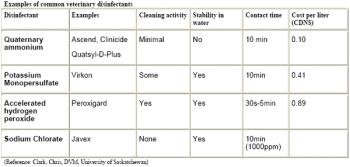
Nosocomial infections are defined as infections that are neither present nor incubating at the time of hospital admission. Nosocomial infections range from mild to severe, depending on the affected system and resistance of the bacteria. On average, human nosocomial infections result in a 2.5 times longer length of stay in hospital.