







Banner - Fetch Kansas City 2026

Ophthalmology

Latest News


CME Content


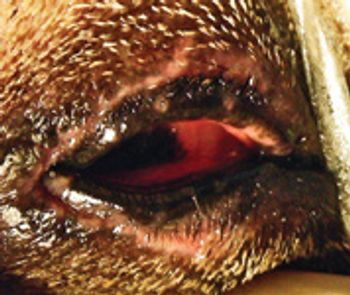
The "red eye" may present for many different reasons. Periocular trauma, conjunctival hyperemia, corneal vascularization, intraocular hemorrhage, and detached subalbinotic retinas may all lead to the complaint of a "red eye". Examination of the eye should lead to localization of the abnormality and standard ophthalmic testing should be performed, including schirmer tear tests, fluorescein staining, and intraocular pressures.

Pertinent ophthalmic anatomy for veterinarians in private practice is reviewed from the outside in, as are related diagnostic tests and pertinent diseases. In order, the orbit, eyelids, third eyelid, tear film, nasolacrimal drainage system, cornea and sclera, lens, uveal tract (iris, ciliary body, choroid), iridocorneal angle and aqueous dynamics, vitreous, retina, optic nerve, and visual cortex are reviewed.

Portosystemic shunt (PSS) is an abnormal vessel that shunts portal blood from the splanchnic circulation to flow directly to the systemic circulation by passing the liver. Toxins, hormones, nutrients, escaping bacteria, and exogenous drugs also bypass the liver resulting in hepatic encephalopathy (HE).

Corneal surgical techniques available for use in veterinary medicine are reviewed. Surgeries discussed include linear grid keratotomy, multiple superficial punctate keratotomy, diamond burr superficial keratectomy, thermokeratoplasty, keratectomy, conjunctival graft placement (pedicle, island, bridge, advancement, etc.), corneoconjunctival transposition flaps, penetrating and lamellar keratoplasties (corneal transplants), biosynthetic graft placement (A-cell, BioSist), and amnion graft placement.

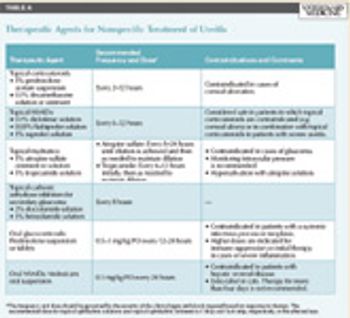
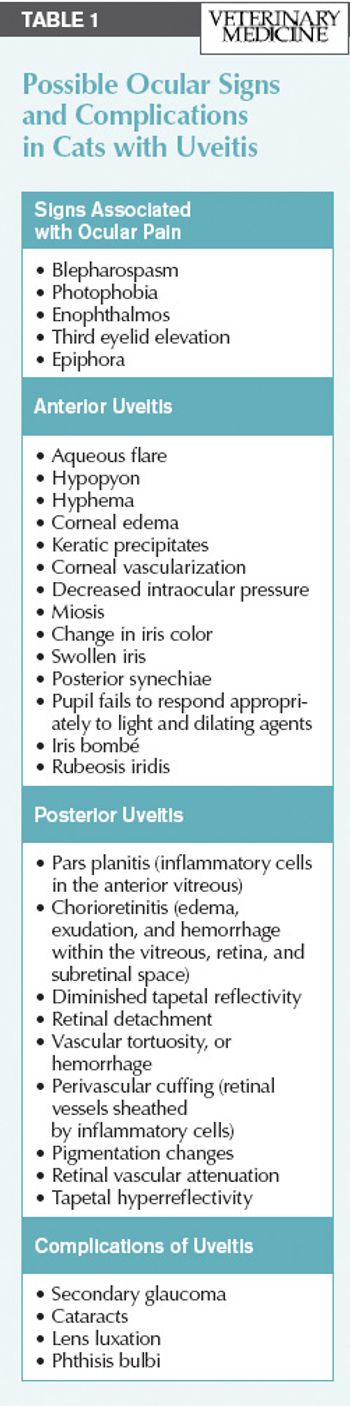
TableA_t-640127-1384409032604.jpg

Nonspecific therapy for feline anterior uveitis includes topical mydriatics, corticosteroids, and nonsteroidal anti-inflammatory drugs (NSAIDs).