










Primary gastric neoplasia is an important differential diagnosis for a dog or cat with vomiting, especially chronic vomiting, anorexia and weight loss, particularly animals that are middle-aged and older.
Primary gastric neoplasia is an important differential diagnosis for a dog or cat with vomiting, especially chronic vomiting, anorexia and weight loss, particularly animals that are middle-aged and older.
Over the last several decades we have witnessed tremendous changes in dairy production systems.
An outbreak of respiratory disease occurred in a kennel of racing greyhounds in 2004.
Feline infectious peritonitis (FIP) continues to be a significant disease in domestic cats.
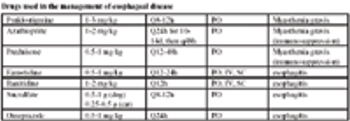
Esophageal disease can easily sneak up on the unsuspecting clinician if regurgitation, the cardinal sign of esophageal disease, is not considered a differential diagnosis for an animal that presents for what the owner perceives as vomiting.
Direct transmission requires that animals be in close, intimate contact because the animal-free state of the virus must be very short in order to effect a successful transmission of viable virus.
When I report back to a cattle owner that his animal is "BVD positive," before I can even begin to explain what that means, I am all to often asked "what is BDD, BV . . . what?" since I am usually talking to the rancher about a normal calf , not an obviously sick animal.
The protein-losing enteropathies (PLE) comprise a collection of intestinal, usually small intestinal, diseases typically associated with weight loss, hypoproteinemia caused by hypoalbuminemia or panhypoproteinemia, and variable signs of vomiting and diarrhea.
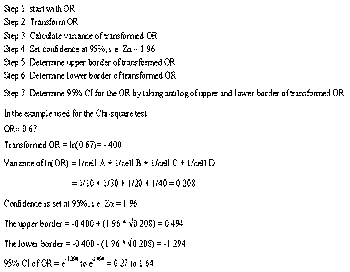
When planning a disease outbreak investigation, it is very helpful to know beforehand the major risk factors associated with the disease to be investigated.
Chemical Terrorism: The Role of the Large Animal Veterinarian
Esophageal diseases cause disturbance of food flow through the esophagus due to obstructions from foreign bodies and tumors, inflammation, decreased motility, and compression of the esophagus from intramural or extra-luminal masses.
A test is available to detect the MDR-1 genetic deletion that leads to P-glycoprotein deficiencies in collies and related breeds.
Immune-mediated hemolytic anemia (IMHA) is a devastating disease in dogs with a reported mortality rate that ranges between 29% and 70% in the veterinary literature.
Identify problems according to the 8 principles (actually, 4 pairs of principles)
Canine babesiosis is a tick-borne disease caused by a hemoprotozan parasite belonging to the order Piroplasmida within the phylum Apicomplexa.
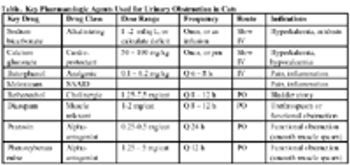
The most common causes of voiding disorders in cats include: obstruction with urethral plug, urolith, or blood clot; urethrospasm resulting in functional obstruction (usually post blockage); bladder dysfunction (detrusor atony) following blockage; and neurologic lesions leading to detrusor atony.
Immune mediated hemolytic anemia (IMHA) can be a common cause of acute lethargy, depression, weakness, and collapse in emergency patients.
A physical examination, fecal parasite screen, and vaccine needs assessment should be performed at least yearly for all cats.
Acute and chronic upper respiratory tract disease caused by feline herpesvirus (FHV) and feline calicivirus (FCV) is well known to practitioners.
Despite their marked efficacy in suppressing the immune system, alternatives to glucocorticoids must often be considered when treatment immune-mediated or chronic allergic diseases in dogs and cats.

Diabetes mellitus occurs in both dogs and cats and is the most common endocrine disorder in the emergency setting.
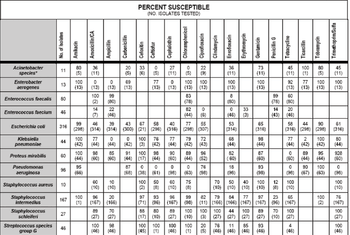
Increasingly, the veterinary practitioner will find that the favorite drug of choice is no longer a viable option.
Anemia is commonly seen in veterinary emergency and critical care medicine.

Critically ill animals are often presented to the veterinarian for emergency medical management.
While elective gonadectomy is one of the most common veterinary surgeries performed in North America, little data exist to suggest the optimal age.
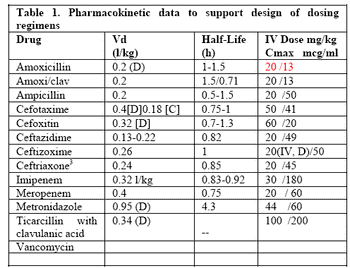
The principles of pharmacology upon which a dosing regimen is based, and the impact of disease in the critical patient were discussed in the companion manuscript entitled "Adjusting Doses" in this same proceedings.
Hypoadrenocorticism, or Addison's disease, results from deficient production of glucocorticoids and/or mineralocorticoids by the adrenal glands.
Pericardial effusion is defined as the accumulation of fluid within the pericardial space.
The emergency clinician is occasionally called upon to treat smoke and burn injuries resulting from house fires or other sources of thermal, chemical, or electrical injury.
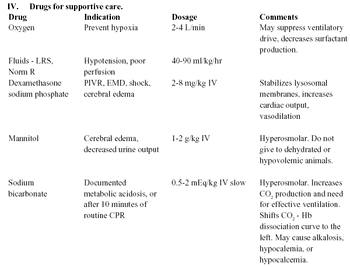
Cardiopulmonary arrest (CPA) is the cessation of functional ventilation and effective circulation.